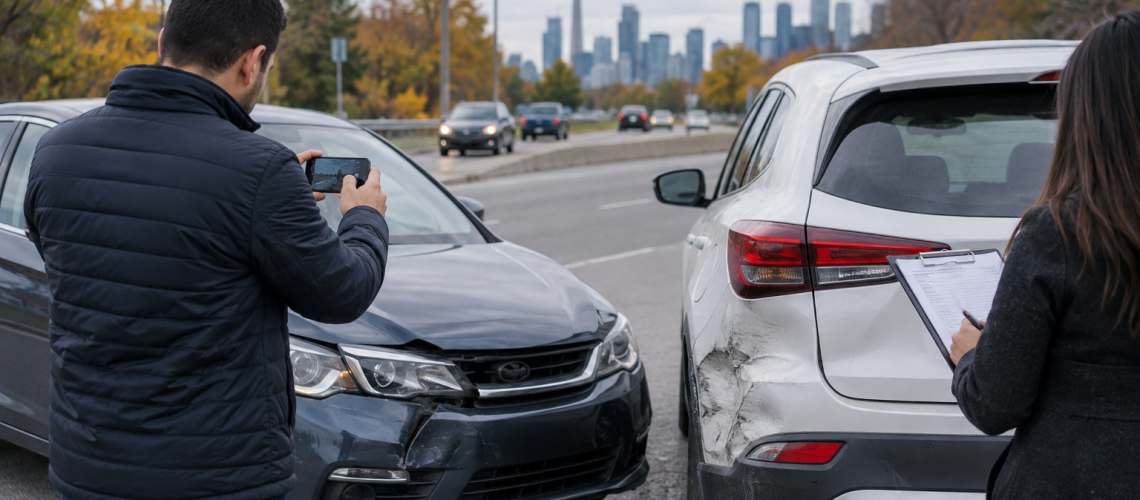
A car accident can turn an ordinary day into a blur of phone calls, forms and unfamiliar insurance language. In Ontario, the decisions you make at the scene and during the first few days can affect your safety, your insurance claim and the evidence available later. This guide explains the practical steps to take, what information to collect, how Ontario's claims process generally works and when it may be sensible to obtain legal advice.
Last reviewed: September 2026. This article provides general information for people in Ontario. It is not legal advice, and insurance coverage depends on the wording of your policy and the facts of your case.
At a glance
- Stop, stay at the scene and check whether anyone is injured.
- Call 911 if there are injuries, immediate danger or suspected criminal activity.
- Photograph the vehicles, the road, the surrounding area and any visible damage.
- Exchange driver, vehicle and insurance information without debating fault.
- Report the collision as required and notify your insurer promptly.
- Keep every receipt, medical record, estimate and claim-related message in one place.
First, make the scene safe
Ontario's Financial Services Regulatory Authority (FSRA) advises drivers involved in a collision to stop immediately. If anyone may be injured, call 911 and follow the dispatcher's instructions. Do not move an injured person unless remaining where they are creates an immediate danger.
If the vehicles can be moved safely and police have not instructed you to leave them in place, move out of active traffic. Turn on hazard lights and use warning triangles or flares if they are available and can be placed safely. A damaged vehicle, leaking fluid, smoke or fast-moving traffic can create a second emergency, so personal safety comes before documenting property damage.
When should you call the police?
FSRA says police should be called when someone is injured, when the combined damage to the vehicles appears to exceed the applicable reporting threshold, or when you suspect that a driver is impaired by alcohol or drugs. Police involvement may also be appropriate when a driver leaves the scene, refuses to provide information, threatens anyone, appears to be driving without a valid licence or insurance, or when public property has been damaged.
Reporting rules and local procedures can change. If you are unsure whether police must attend, call the local police service's non-emergency line and describe the collision. Follow the instructions you receive. Where police attendance is not required, you may be directed to a Collision Reporting Centre.
What to document before you leave
Good documentation is factual, calm and thorough. You do not need to decide who caused the collision at the roadside. Your insurer will investigate, and fault for insurance purposes is determined under Ontario's rules rather than by an informal agreement between drivers.
Collect or photograph the following:
- Each driver's full name, address, phone number and driver's licence information.
- The name of the registered owner if that person is not the driver.
- Licence plate numbers and the make, model and colour of each vehicle.
- Insurance company names, policy numbers and the insured person's name.
- The date, time and precise location of the collision.
- Wide photographs showing vehicle positions, lanes, signs, traffic lights and weather conditions.
- Close photographs of damage to every vehicle, including areas that appear undamaged.
- Names and contact details for independent witnesses.
- The investigating officer's name and badge number, or the Collision Reporting Centre report information.
- The towing company's name, destination, quoted charges and paperwork before your vehicle is moved.
Write a short account of what happened while the details are fresh. Record the direction each vehicle was travelling, the lane you were in, the colour of any traffic signal and what happened immediately before impact. Keep this account private for your insurer or legal adviser. Avoid posting photographs, health updates or comments about fault on social media.
What should you say to the other driver?
Be civil and exchange the required information, but do not argue about fault or speculate about injuries. An automatic apology made in a stressful moment is not a reliable account of the event, and neither is an accusation. A useful approach is simple: check whether anyone needs help, exchange details and let the formal process address responsibility.
Never sign a roadside agreement to pay privately, accept cash in place of exchanging insurance information or allow another driver to photograph documents unrelated to the collision.
Notify your insurance company promptly
FSRA's current consumer guidance says an accident should be reported to your broker, agent or insurance company within seven days, or as soon as possible after that if seven days is not reasonably possible. Unreasonable delay may jeopardize a claim. Your policy may impose specific duties, so the safest course is to contact your insurer promptly even if the damage initially looks minor.
Have your policy number and the information collected at the scene ready. The insurer will normally open a claim and assign an adjuster. The adjuster may ask for a statement, photographs, repair estimates, medical information or a Proof of Loss form. Ask for the claim number, the adjuster's direct contact information, the deductible that may apply and written confirmation of the next steps.
How fault is determined in Ontario
Ontario insurers use the provincial Fault Determination Rules to assess responsibility for many common collision scenarios. The assessment can range from zero to 100 percent fault and may be shared between drivers. Weather, road conditions and whether the police laid a charge do not necessarily decide the insurance fault assessment.
If you disagree with the result, ask the adjuster to identify the specific rule used and explain how it applies to the evidence. Put your concerns in writing and provide any missing photographs, witness information or records. If the insurer does not change its position, request its complaint process and the contact details for its complaint officer.
Vehicle damage, repairs and a total loss
Coverage for vehicle damage depends on your policy, your fault assessment, the circumstances of the collision and the coverage you purchased. The adjuster may arrange an inspection and direct you to obtain an estimate. Before authorizing repairs, confirm what the insurer has approved, whether betterment or depreciation may be applied, who pays the deductible and whether rental transportation is covered.
If repairing the vehicle would cost more than its pre-accident value, the insurer may treat it as a total loss. Ask how the actual cash value was calculated and request the comparable vehicles or valuation evidence used. Check the listed trim, mileage, options and condition. If something is inaccurate, provide listings, maintenance records or other objective evidence rather than relying only on a preferred asking price.
Since January 2024, Ontario drivers have been able to elect not to recover under Direct Compensation – Property Damage coverage. Opting out can substantially change what is payable after a collision. Do not assume your policy includes every form of property-damage protection; check the declarations page or ask your broker or insurer to explain the coverage in writing.
If you were injured
Seek medical attention when symptoms are serious, worsening or concerning. Some problems, including concussion symptoms, may not be obvious immediately after a collision. Tell the health-care provider that the symptoms followed a motor vehicle accident and describe them accurately. Keep copies of medical instructions, referrals, prescriptions, treatment expenses and time missed from work.
Ontario auto policies include mandatory medical, rehabilitation and attendant-care accident benefits. Important changes took effect on July 1, 2026: FSRA explains that several other accident benefits are now optional for policies entered into or renewed under the new rules. The exact benefits available can therefore depend on your policy date, the optional coverage purchased and who was insured under the policy.
Ask the insurer for the accident-benefits application package and the deadlines that apply to each form. If an injury is significant, benefits are denied, income has been interrupted or the insurer requests a broad medical authorization, consider speaking with an Ontario lawyer who regularly handles motor vehicle and insurance matters.
What if the other driver has no insurance?
Your own policy may provide uninsured automobile coverage when the at-fault vehicle is uninsured, but eligibility and limits apply. FSRA notes that identifying the other owner or driver can be important. A hit-and-run or uninsured-driver claim should be reported promptly to the police and your insurer. Provide every detail that may help identify the vehicle, including partial licence plate information, photographs, witness accounts and nearby camera locations.
Keep a complete claim file
Create one folder, physical or digital, for the entire claim. Save the collision report, photographs, emails, estimates, invoices, rental documents, towing receipts, medical records and a log of conversations. After an important phone call, send a short email confirming what was discussed and any deadline or commitment given.
A simple claim diary can also be useful. Note pain or functional limitations, appointments, medication, work absences and expenses as they occur. Keep it factual. A contemporaneous record is usually more reliable than trying to reconstruct several months from memory.
Common mistakes after an Ontario collision
- Waiting to report the accident: Prompt notice gives the insurer an opportunity to investigate and helps prevent missed forms or deadlines.
- Taking too few photographs: Damage can change during towing or repairs, and the road scene cannot be recreated later.
- Discarding receipts: Towing, transportation, medication and other costs may matter to the claim, depending on coverage.
- Approving repairs too early: Confirm the scope of work and the insurer's authorization before committing.
- Giving a recorded statement while confused or medicated: Ask why it is required and take time to provide accurate information.
- Signing a release without understanding it: A settlement may end the right to seek further payment, even if symptoms later worsen.
- Posting about the accident online: Public comments and images can be taken out of context.
When legal advice may be worth obtaining
Not every fender-bender requires a lawyer. Independent legal advice becomes more important when someone is seriously injured, fault is disputed, the insurer denies coverage or benefits, a commercial or rideshare vehicle is involved, the other driver is uninsured, the vehicle valuation is materially contested or you are asked to sign a final release.
A lawyer should explain the applicable deadlines, available insurance benefits, possible claims, likely costs and alternatives. Ask whether the initial consultation is free, how fees and disbursements work and who will manage the file. You can verify a lawyer or licensed paralegal through the Law Society of Ontario's public directory.
Ontario car accident checklist
- Stop and check for injuries.
- Call 911 when required and protect the scene from further danger.
- Exchange driver, vehicle and insurance information.
- Photograph the scene, vehicles and relevant road conditions.
- Collect independent witness details.
- Report the collision to police or a Collision Reporting Centre as directed.
- Notify your insurer promptly and obtain a claim number.
- Seek medical attention and document new symptoms.
- Keep every record and receipt connected with the accident.
- Get legal advice before signing a release if injuries, liability or substantial losses are involved.
Frequently asked questions
Do I need to report a minor accident to my insurer?
Prompt reporting is generally the prudent approach, even when damage appears limited. Hidden damage and delayed symptoms are common, and your policy may require notice. Ask your insurer how a report will be recorded and what information it needs.
Does a police charge decide who is at fault?
No. A charge and an insurance fault assessment are separate questions. Insurers apply Ontario's Fault Determination Rules to the collision circumstances.
Can I choose my own repair shop?
You can ask to use a repair facility you trust, but confirm the process with the adjuster before authorizing work. Ask who guarantees the repairs and whether the insurer and shop agree on the estimate.
What if pain starts the next day?
Seek appropriate medical advice, tell the provider when the collision occurred and notify the insurer. Do not minimize or exaggerate symptoms; accurate medical documentation is important.
Should I accept the insurer's first settlement offer?
Review what the offer covers and whether it requires a release. If injuries are ongoing, future expenses are uncertain or the amount is significant, obtain independent advice before accepting.
Official Ontario resources
- FSRA: What to do after an accident
- FSRA: After an accident – understanding the claims process
- FSRA: Ontario auto insurance consumer information
- Law Society of Ontario: Find a lawyer or paralegal
Editorial note: Rules, reporting thresholds and insurance coverage can change. Verify current instructions with the relevant police service, Collision Reporting Centre and your insurer.
